How to Cook: Sautéing Vegetables

We’re back with another “How to Cook” article. Imagine you have your pan on the stove and a stack of fresh veggies on your counter. So far, so good. Now the questions start. What oil do I use? How high should the temperature be? Do I slice, dice or chop? Do I cook all the veggies at once? How large should I cut them? How can something so easy be so confusing and worse yet, unpredictable?
Not to worry. This post in our “How to Cook” series tackles sautéing. We’ve all heard that we need five to seven (even nine or 11 servings) of veggies a day, but how to eat enough in a day is the challenge. When you sauté, you can cook several different vegetables at once, introduce delicious flavor combos and entice even the fussiest eater. After all, what’s not to love about olive oil, butter and coconut oil? Don’t they make everything taste better?
Sautéing
The word sauté comes from the French word ‘sauter’ which means ‘to jump’ and perfectly describes what your food might be doing in the pan. Most soups start out having you sauté vegetables in order to enhance their flavors. Cooking foods fast reduces the chance of destroying vitamins.
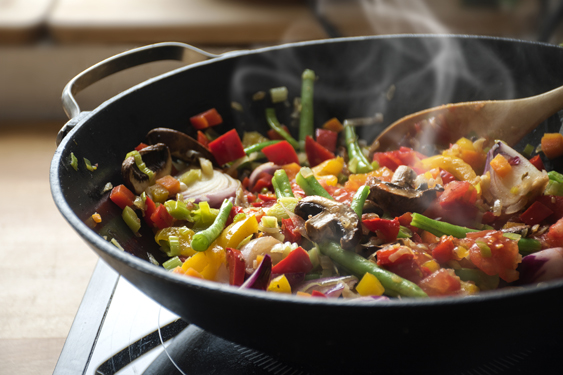 Perfectly Sautéed Vegetable Tips
- Cut all the vegetables to similar sizes.
- Be aware that some veggies take longer to cook than others. Add vegetables that will take the longest to cook to your skillet first and then continue to add in faster cooking vegetables as you go. Of course the size you cut your vegetables will also impact how fast they cook.
- Stir frequently, not constantly.
- Season your vegetables after they are cooked.
- Bigger is better when it comes to skillet size. In the words of Julia Child, “Do not crowd the pan!”
Vegetable Cooking Times
10-15 minutes: carrots, potatoes, beets, Brussels sprouts, parsnips, winter squash
5-10 minutes: broccoli, cauliflower, cabbage, green beans, onion, leeks
5 minutes: zucchini, tomatoes, summer squash, snow peas/snap peas
2-5 minutes: kale, spinach, Swiss chard
Similar to roasting, it’s important to choose the right kind of fat for cooking. Butter, coconut oil and olive oil work great for sautéing, but if you want to get things done a bit faster in a hotter skillet, using ghee (clarified butter) or peanut oil is a better choice. Why? Heating oil at too high of a temperature damages it and creates trans-fats. Olive oil, coconut oil, and butter will start to smoke in your pan at around 375°F. Even though many charts say that vegetable, grapeseed, and canola oil can withstand temperatures of 500°F or greater, we don’t recommend using these oils since they are always refined and damaged before they even hit your skillet.
Leeks, Corn, & Red Peppers
Whenever clients tell our nutritionists that their family doesn’t like to eat vegetables, they frequently pull out this recipe. It’s so colorful that not even the pickiest eaters can resist it.
If you’re not familiar with cooking leeks, we promise it’s not hard. Leeks look like giant green onions and have a very subtle onion flavor, nowhere near as strong as a real onion. To prepare them, follow these simple instructions.
- Cut off the dark green “leaves.” You can use these for making broth/stock, but they are too tough to eat. The lighter green portion is still edible.
- Cut off the root end and slice the entire stalk lengthwise.
- Slice the leeks crosswise into thin strips, separating the layers.
- Rinse the leeks in a colander to remove any grit.
Now for the recipe…
3 Tbsp olive oil
2 leeks (sliced)
1 c. red bell pepper (chopped)
2 c. snap pea pods
1 c. fresh or frozen corn
½ tsp salt
¼ tsp pepper
Directions:
- Heat skillet over medium heat, when the skillet is hot add the olive oil. Swirl to coat the skillet.
- Sauté the leeks, bell pepper, and pea pods until soft, 5-7 minutes.
- Add the corn and continue cooking until it is warmed through.
- Season with salt and pepper and serve.
Sautéed Mushrooms, Peppers, Onions
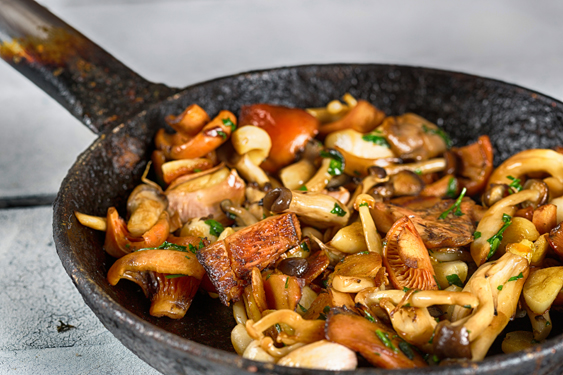 This “recipe” is perfect to serve with fajitas (you can sauté the meat in a separate skillet) or use as a topping for burgers, steak, or the roast pork tenderloin in the previous article. Another option is to add shrimp to the sautéed veggies and serve over rice. The best part about mushrooms is that you really can’t overcook them. Once they hit a certain tenderness, they don’t get much softer.
Ingredients:
2 Tbsp butter
1-2 bell peppers (sliced thin)
½ medium onion (sliced thin)
8 oz sliced mushrooms
3 cloves garlic (minced)
¼ tsp salt
Directions:
- Heat a large skillet over medium heat (numbers 4-6 on your stove dial).
- Add the butter and let it melt.
- Add sliced vegetables and stir to coat with melted butter.
- Saute 5-7 minutes, then stir in garlic and continue cooking another 10 minutes until everything is soft. Season with salt and remove from heat.
Zucchini Medley
The best part about learning to sauté vegetables is that once you master the technique, you can go in so many different directions. Use this recipe as a starting point, but don’t worry if you don’t have the exact amounts of each vegetable. This is just a great way to use up random vegetables at the end of the week so they don’t go bad in your refrigerator.
Ingredients:
1 Tbsp olive oil
½ c. onion (diced)
1 clove garlic
1 c. zucchini (sliced)
½ c. bell pepper (sliced)
1 c. yellow summer squash (sliced)
1 tomato (cut into wedges)
½ c. green beans (ends trimmed off)
¼ tsp pepper
2 Tbsp balsamic vinegar
1 tsp Dijon mustard
Directions:
- Heat skillet over medium heat. When it’s hot, add the olive oil and swirl to coat.
- Add the onion and garlic and sauté for 5 minutes.
- Add the remaining ingredients and cook until tender.
By now you should be feeling like a pro when it comes to sautéing vegetables and roasting. In the next ”How to Cook” article we will teach you how to pan-fry meats like chicken thighs, beef and tuna steaks.
Share This Article