A Dietitian’s Colonoscopy Prep

 As I went in for my annual physical exam a few years ago, I heard a surprising request from my doctor. She told me that I needed to schedule a colonoscopy.
At the time, I thought she must have been mistaken and read the age on my forms incorrectly. As far as I knew, I wouldn’t have to have this dreaded procedure until age 50, and I was only 45. I went home and looked online to verify this information. My doctor was in fact correct!
In 2021, the U.S. Preventive Services Task Force issued the recommendation that the screening age be lowered to 45 for those at average risk for developing colorectal cancer. The reason this was instated was due to the rise in people UNDER the age of 55 dying from colorectal cancer.
Why You Might Get A Colonoscopy
One of the main reasons colonoscopies are recommended is for colon cancer screening in a preventative-medicine approach. Tune into the Dishing Up Nutrition episode titled Colon Cancer airing on June 10, 2023 to learn more information if this topic is of interest, but some symptoms of colorectal cancer are: diarrhea or constipation (especially for more than a few days), rectal bleeding and/or blood in the stool, abdominal cramping, fatigue or weakness and unexplained weight loss.
Sometimes there are no symptoms at all or not until it has spread to other areas of the body. It is best to detect it as early as possible with a colonoscopy in case treatment is needed and before it spreads.
You might, however, be someone who needs to get a colonoscopy earlier than the new recommended age of 45. Some of those reasons might be: a personal or strong family history of colorectal cancer or certain types of polyps, a history of irritable bowel syndrome, such as ulcerative colitis or Crohn’s disease, and/or a history of radiation to the abdomen or pelvic region to treat cancer.
My Experience With Colonoscopy Prep
Fast forward another year to my next physical, my doctor yet again insisted that I have this procedure completed (I was dragging my feet!). I finally pulled the trigger and scheduled the test.
As I read through the instructions on the preparation and procedure, I started to squirm. The instructions:
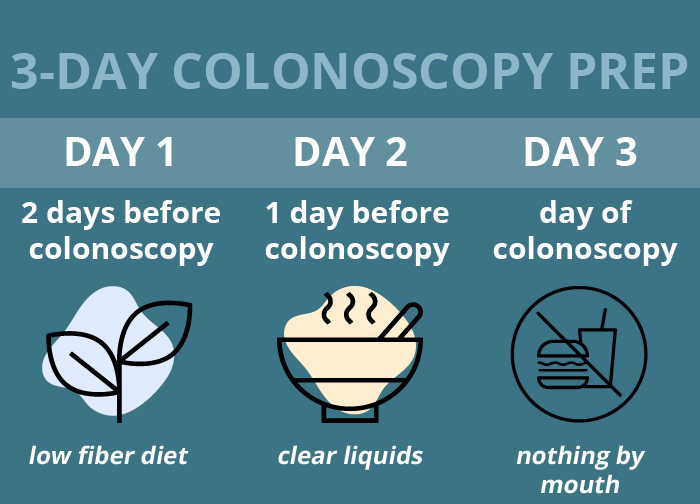
3-Day Colonoscopy Prep
- Day 1 (2 days before colonoscopy): Low Fiber Diet
- Day 2 (1 day before colonoscopy): Clear Liquids
- Day 3 (day of colonoscopy): Nothing By Mouth
How would I eat a low fiber diet for 2-3 days prior to the procedure on my healthy dietitian-based diet and then on the day before the procedure live on dreaded Jell-O and Gatorade, both of which I preached to my clients not to eat or drink?
To ease myself through the experience, I put a game plan in place ahead of time, so I could continue to eat the protein, healthy fat, vegetable carbohydrate foods that help my body feel the best while still staying within the realm of a low fiber diet, as requested by my physician who would be completing the colonoscopy.
This balanced, real food approach to eating is what we at Nutritional Weight & Wellness follow and teach to our clients. You’ll be happy to know that it’s possible to still choose those real food options while sticking to the colonoscopy procedure protocol – it might just take a little extra effort.
Why A Low Fiber & Clear Liquid Diet
We know that a healthy diet is one that is filled with lots of good fiber, so why go through all of this effort of choosing low fiber and clear liquid? If you’ve had a colonoscopy before, you probably know the gist, but to remind you and help with the newbies, to have a successful procedure your medical team needs to be able to see the tissues in your colon in order to detect any lesions or polyps or abnormalities.
Cleansing your bowels over the course of the 2-3 days before your procedure helps clear the way. High fiber foods are harder to digest and might prevent the colon from completely emptying during the prep.
What I did For My Prep *
Here are the following low-fiber foods I consumed during that 2–3 days before my procedure, broken into categories:
*These ideas are not meant to replace your doctor’s orders – work with your medical team to come up with a plan for you.
Proteins: Rotisserie chicken from Whole Foods, grass fed hamburger crumbles (with Primal Kitchen spaghetti sauce), nitrate-free deli meats (turkey and ham), organic cheeses, full fat Good Culture cottage cheese, plain full fat Greek yogurt mixed with vanilla protein powder.
Carbohydrates: (this is where low fiber gets tricky!) - cooked green beans, cooked and peeled zucchini, peeled and cooked baby potatoes, cooked carrots, overly ripe pear (peeled), very soft cantaloupe, rye bread
Fats: (this is tricky as well - no nuts, no seeds, no avocados, and no guacamole) - I primarily focused on the liquid fats: butter, olive oil, avocado oil and mayo
During this window of “prep” time, it was also very important to drink lots of water to ensure I was headed into the procedure well hydrated. Personally, I drank around 75-80 oz., which is more than I needed as I typically aim for 60-65 oz, but not to the point of excessive water consumption.
On the day before the procedure, I was only allowed to consume clear liquids. I bought a good quality bone broth from Whole Foods, or if you’d prefer, you can make your own homemade bone broth. I put the bone broth in a mug, heated it in the microwave and sipped it, in conjunction with water, all throughout the day.
I chose not to do the Gatorade that is often recommended as a clear liquid option because I didn’t want the added sugars and artificial sweeteners. Instead, I bought the Synerplex Revive Electrolytes and primarily mixed it with water.
To assist with the taste, I bought organic apple juice and used that sparingly as well. The organic apple juice and bone broth colonoscopy prep helped keep my blood sugar steady while adhering to the clear liquid guidelines and using the over the counter laxatives needed for the procedure.
After the colonoscopy procedure was completed the following day, I was allowed to resume a normal diet with no restrictions in place. What I thought would be a challenging few days ended up not being as difficult as I thought it was going to be!
Medical Disclaimer: This article is an example of how a dietitian handled their colonoscopy prep. The information is only to be used with the support of your doctor. It is not meant to replace your doctor’s colonoscopy protocol without their consent.
For more information on the health of your colon, check out these resources:
WATCH:How to Make Bone Broth | Step By Step Instructional Video on how to make your own bone broth colonoscopy prep ingredients
LISTEN:Am I At Risk For Colon Cancer? To learn colon cancer statistics, risk factors, symptoms, and nutritional tips to help reduce your risk
LISTEN:Maintain Your Strength During Cancer Treatment with special guest Kelly McGraw, RD, LD who is a colon cancer survivor
Sources:
Share This Article