GLA for Skin, Weight & Hormones

GLA, which stands for gamma linolenic acid, is a supplement we often recommend in clinic for a collection of things, but most importantly: skin (and hair), weight, and hormones.
This article will answer your burning questions on everything GLA, what the GLA supplement benefits are, and how to take it if essential fatty acid supplementation is right for you.
What is GLA?
Gamma linolenic acid, GLA for short, is a special type of fat in the omega-6 fatty acids family. We need a proper balance from omega-6 (and omega-3) in our body to thrive. Think of GLA as an activated form of omega-6 fatty acids that nourishes your cells and decreases inflammation and without it, things don't work properly.
What does that mean? It means getting the right amount of gamma linolenic acid can maintain youthful skin, balanced hormones, and an efficient metabolism.
As an example of how nourishing gamma linolenic acid is, it's interesting to note that breast milk is full of essential fatty acids, including GLA. To think we get fed this healthy fatty acid in our first weeks of life, if we were given breast milk as babes, proves how healing it can be for our bodies.
GLA is harder to find in significant amounts in the normal food supply, so most people who seek the benefits of GLA turn to supplementation from evening primrose oil or borage seed oil.
Benefits of GLA For Your Body?
Gamma linolenic acid can be most effective for these three things:
- Skin – GLA promotes hydration and elasticity inside and out.
- Weight – GLA potentiates fat loss and increases energy.
- PMS & Menopause – GLA supports hormones and reduces inflammation.

GLA Supplement Benefits For Skin:
Do you suffer with dry skin, broken nails or cracked heels? Then, no matter how much lotion you use, nothing seems to help? How about dry hair, bumps on the back of your arms and cracked fingertips?
The integumentary system (skin, hair, nails, and glands) is your largest organ. It's made up of countless cells that rely on essential fatty acid like GLA to stay resilient and supple, inside and out.
Cracking skin, dry hair and brittle nails may indicate you need more fats like gamma linolenic acid. If you're dealing with dermatitis, you will be happy to know that GLA is an effective treatment for some. (1) It can also be helpful for those who are dealing with eczema or psoriasis. The benefits don't stop there; GLA helps maintain skin's moisture and elasticity as we age. It may even reduce wrinkles! (2)
Plus, beyond skin benefits, it might be surprising that some of our clients find GLA relieves incontinence or asthma. In both cases, GLA provides moisture for internal tissues and supports the lining of the bladder and lungs to work better and stay flexible.
"I have been using GLA for a few years now and it is the ONLY thing that has ever gotten rid of my dry scalp. Where head and shoulders fails, GLA prevails. I can’t live without this anymore.
It has multiple other benefits as well that other reviews can speak to :)" ~Krissy
GLA Supplement Benefits For Weight:
Simply put, your body needs the right kind of fats to lose fat. Gamma linolenic acid is one of the right kinds to turn on your body's fat burning network. GLA makes a certain kind of prostaglandin (a fat that works like a hormone) to activate the metabolism. (3) Through this messaging network, GLA revs up fat burning and boosts energy.
When working with clients, we often find that a lack of essential fatty acids, like GLA, is a missing component to activating fat burning for weight loss.
GLA Supplement Benefits For Hormones:
Can you count on the struggle with PMS symptoms like clockwork? Or are you in the throes of menopause and feel like a walking furnace and chest freezer all at once? Let’s not dwell on the negative.
Instead, let’s talk about one of our favorite tools to combat these uncomfortable symptoms (plus, night sweats, mood swings, we're talking about those too among others!) that come from hormonal disturbances.
For these uncomfortable, rollercoaster symptoms we often recommend gamma linoleic acid. Remember, a GLA supplement is a ready to use (activated) form of omega-6 that nourishes your cells and decreases inflammation. Less inflammation means fewer hormonal rollercoasters during the month. Anytime you can reduce inflammation in the body, you’re doing yourself (and future self) a huge service!
GLA Benefits For PMS:
Ok, bear with us because this gets a little science-y. A deficiency of essential fatty acids, like GLA, isn’t a good thing. It causes low prostaglandin levels (signaling molecules that regulate certain body functions, like menstruation) and high sensitivity to prolactin (a reproductive hormone in the brain).
In women, prolactin is higher in the second half of the menstrual cycle. This means more intense PMS symptoms as you get closer to your period. No fun … but GLA to the rescue! The linoleic acid in GLA helps to increase prostaglandins, which in turn helps to relieve PMS and makes your hormonal cycle through the month a smoother ride.
Studies have shown up to 3,000-6,000 milligrams of evening primrose oil (a form of GLA) to be safe and effective. If someone is really struggling with PMS symptoms, we commonly recommend 4-6 softgels per day of GLA-160 (which is 4,000-6,000mg of borage seed oil) to fully supply the body with this crucial fatty acid.
GLA Benefits for Menopausal Symptoms:
In the early days at Nutritional Weight & Wellness, one of our dietitians met a regular client who swore that taking GLA had completely gotten rid of her hot flashes. With her enthusiasm in mind, and research supporting this claim, we share this option with clients in peri-menopause and menopause who are struggling with those infamous hot flashes.
Research supports the use of GLA for reducing the severity and frequency of hot flashes and who doesn’t love that result?
The amounts used in these studies were fairly small, at 500-1,000mg per day. So 1 softgel of GLA-160 per day (which is 1,000mg of borage seed oil) may be sufficient for some women. Others may need more, especially if they struggle with vaginal dryness or other dry skin, hair, and nails in menopause.
If you can relate to the struggle of hormones, wherever you are in your cycle or menopause, consider trying GLA and watch how you feel.
We often remind our clients that supplements (especially fat-based supplements like this one), rarely produce overnight results. Many studies used GLA for at least 8 weeks, and we often recommend taking GLA consistently for 3-4 months before re-evaluating your hormonal symptoms and potential benefits.

Food Sources of Gamma Linolenic Acid:
As a food first company, we like to recommend options for folks who like to get nutrients from their food. Both omega-6 fatty acids and omega-3 fatty acids are called “essential” because we can’t make them within our bodies and therefore, we must consume it from food or supplements.
Since gamma linolenic acid is an essential omega 6 fatty acid, this falls into the category of needing to get it from outside of our bodies. Food sources of dietary gamma linolenic acid are found in evening primrose oil, black currant seed oil, borage oil, and in spirulina (often called blue green algae).
Flaxseed oil is rich in alpha-linoleic acid (ALA), a form of omega 3 fatty acid, but it also has some omega 6. Some of our clients take therapeutic doses of both omega 3 and 6 while sometimes it is easier to use separate supplements to achieve the wanted results.
Essential Fatty Acids: Omega 3 vs Omega 6
As we mentioned above, gamma linolenic acid, GLA for short, is a special type of fat in the omega-6 fatty acids family. We need a proper balance from omega-6 (and omega-3) in our body to thrive and GLA helps keep those fatty acids in balance. Let's talk briefly about the differences of omega 3 and omega 6.
A common question we get is "what's the difference between omega 3 fatty acids and omega 6 fatty acids?" Both of these fall under the category of polyunsaturated fatty acids. These dietary essential fatty acids are ones that we need to get through food or supplements because the body doesn't make them on its own.
Food sources for omega 3 fatty acids are fatty fish, like salmon, anchovies, mackerel, herring, sardines, and tuna along with plant sources like chia seeds, flaxseed, and walnuts. Omega 6 fatty acids, like we mentioned above, come from various plant seed oils.
Because omega 6 fatty acid content can also be found in refined oils, like soybean oil, canola oil, and cottonseed oil, if you are eating a lot of processed or fried foods, it's easier to be consuming more omega 6 fatty acids compared to omega 3s.
We often recommend omega 3s fish oil for brain health, heart health, and reducing inflammation and are beneficial for people with heart disease, depression, cancer, Crohn’s disease, ulcerative colitis and other autoimmune diseases, like rheumatoid arthritis.
Omega 6s, in the form of gamma linolenic acid, we recommend as a support for skin, hair, hormones, and metabolism.
Working with a licensed and registered dietitian or nutritionist can help you determine if you are getting the right balance between omega 3s and omega 6 fatty acids or if you would benefit from dietary supplementation, like a high quality fish oil.
How To Take GLA Supplements:
If you decide that taking gamma linolenic acid dietary supplementation is right for you, we would recommend taking 4-6 GLA soft gels daily. GLA is best taken with meals, so many of our clients find it helpful to divide it out between breakfast and dinner.
Like mentioned earlier, especially with hormones, it may take some time to see changes in your cycles or menopausal symptoms. Plan to take GLA for a couple of months and take note of any positive changes.
In our nutritional counseling, we have seen evening primrose oil to be helpful for younger women and borage oil for women after age thirty. Whichever form is right for you, an effective dose can range from 300-1000mg per day. Gamma linolenic acid is safe for teens and adults.
Our Recommended GLA Supplements Brand
When considering nutrient supplementation, it's important to choose a quality product that's gone through third party testing and uses a high standard for ingredients. In clinic, we recommend our sister company NutriKey as a source for great dietary supplements.
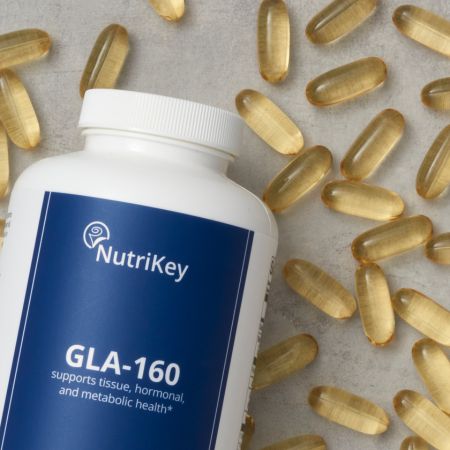
NutriKey GLA-160 provides 4,000 milligrams of borage seed oil (640mg of gamma linolenic acid) and we have had many clients find great success with this product, including our staff!
"I decided to order this last month after I got an email advertising all the benefits from NWW. I wanted to give it a shot and I'm so happy I did! It took me about a month to notice results but my skin is glowing and my PMDD symptoms have decreased dramatically. To the point I was caught of guard by my period showing up and didn't even experience the extreme PMS I usually do. My skin looks the best it ever has! I've received so many compliments on my skin in the last month than I ever have and this is the only thing I can contribute it to. I also get very cystic/hormonal acne and this month I've noticed a significant decrease in my breakouts. I love this product so much! Love what it does for my body and skin and highly recommend trying it out!" ~Lexi
Key Takeaways For GLA
For the health of many systems in the body to function properly, you need a balance of the essential omega-3 and omega-6 fatty acids. Gamma linolenic acid is a therapeutic source of essential omega 6 fatty acids that may help support the health of your skin, your metabolism, and your hormones.
It's important with fat-based supplements to give them time to work in the body and you may not experience results right away.
You can't supplement your way out of a poor diet, so support your efforts with a real, whole foods diet plan and reach out to us if you need help in setting up a meal plan and supplement plan that's right for you.
Nutritionist Support For Skin, Weight, And Hormones
If you have more questions about gamma linolenic acid supplementation for your specific needs, scheduling a nutrition consultation would be a great next step. Our registered and licensed dietitians will look over your health history to see what dose would work best for you and what other dietary adjustments you can make for the best improvement.
For more information on skin, hormones, or weight management, check out these resources:
READ: Acne and Diet: What You Need To Know - food swaps plus key supplements for those who have breakouts.
LISTEN:Boosting Hair Health - Ask a Nutritionist- diet strategies, nutrients, and supplements (including gamma linolenic acid, GLA!) to maintain and promote healthy hair growth
LISTEN: Hidden Weight Gain Factors- where guest, Ann Louise Gittleman talks with our nutritionists about how gamma linolenic acid can assist with weight loss
NutriKey Products Mentioned:
NutriKey GLA-160: provides 4,000 milligrams of borage seed oil with 640 milligrams of gamma linolenic acid, an omega 6 fatty acids source that is instrumental in maintaining hormonal health and healthy tissues throughout the body.
References
1) https://www.ncbi.nlm.nih.gov/pmc/articles/PMC3930832/
2) http://www.ncbi.nlm.nih.gov/pubmed/18492193
3) Gittleman, Ann Louise. The New Fat Flush Plan. New York: McGraw-Hill Education, 2017
https://pubmed.ncbi.nlm.nih.gov/30401547/
Share This Article